During the beginning of the 2000’s the 4th generation of consoles were still going strong, it was a time of great technological advancements for home consoles, going from 32 bit to 64 bit and the introduction of real 3D graphics, I can imagine this time being absolutely mind blowing for someone who had been used to the 2D 8-bit and 16-bit graphics which had previously been the norm.
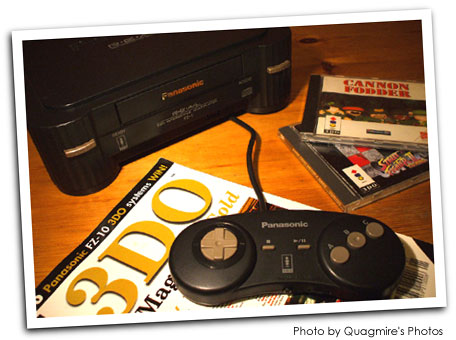
The first 3D capable games console was actually released a bit before the 2000’s in 1993; The 3DO Interactive Multiplayer, which due to its high price tag compared to the Atari Jaguar did not fare well in terms of sales, leaving a gap in the market which was filled fully by the Sony PlayStation one (released in 1995).

In most peoples minds there were only two prevalent consoles around at the time; the PlayStation and the Nintendo 64 (released in 1996), there were other consoles around at the time such as the Sega Saturn, however this console did not perform as well due to reasons such as the lower price point of the PlayStation its more desirable release games, and the Nintendo 64 taking market share. At the time Nintendo was an incredibly powerful player in the games industry, after taking the industry by storm with the success of the NES and building on that with the NES the success of the PlayStation was rather upsetting to the status quo.

On the other side of the gaming market PC games were thriving with the availability of broadband reaching more and more people online games were all the rage. Everquest (released in 1999) spearheaded the rise of the MMORPG which of course succeeded to what is regarded as the most successful MMORPG World of Warcraft (released in 2004)
 Leading off on a slight tangent my favourite aspect of PC games is the ability for users to modify them to create their own expansions and stand alone “mods”. Some of the most played PC games of all time began life as a modification of a game; for instance, counterstrike and team fortress 2 were modifications of Half life Death match (released in 1998). Defence against the Ancients was a modification for Warcraft 3, which spawned the MOBA genre which many extremely popular games use in current day.
Lest I get too carried away with the PC side of things (my chosen platform for gaming) I should mention the progression of the console wars. Sony was out of the picture after the fifth generation Sega Saturn which made room for new players to enter the market. The three main contenders for the sixth generation was the Nintendo GameCube the Sony PlayStation 2 and the Microsoft Xbox. The PlayStation 2 won out and is considered the most successful console to this day.

This was the first generation of consoles where I myself had any disposable income and could actually partake in the “battle” I like most people decided to invest in a PlayStation 2 which was already well established before the release of the Xbox.
Nintendo decided not to compete with Sony or Microsoft directly in the 7th generation console wars and marketed the Wii more towards the casual gaming market which has been growing ever since. I decided not to be a part of the 7th generation console wars as I was very happy with the PC gaming market at the time, visuals at the time were steadily progressing on PC where as consoles have always been held back by hardware limitations. I also was part of the modding community for quite a few games which is for me the main thing that pointed me towards game art as a career.
The 8th generation of consoles have just been released and all three sides seem to have chosen their target demographic clearly. Nintendo are sticking with the casual market, Microsoft are aiming for more of a complete media experience and Sony are grasping onto the hardcore gamers. Nintendo have had such a massive success with the casual market and extra peripherals that of course Sony and Microsoft have added peripherals to try and capture some of that market while staying true to their original target audience.

References
Content.time.com, (2014). A History of Video Game Consoles - TIME. [online] Available at: http://content.time.com/time/interactive/0,31813,2029221,00.html [Accessed 27 Apr. 2014].
PCMAG, (2014). Console Wars: A History of Violence. [online] Available at: http://www.pcmag.com/article2/0,2817,2426906,00.asp [Accessed 27 Apr. 2014].
Racketboy.com, (2014). 3DO Interactive Multiplayer 101: A Beginner’s Guide | RetroGaming with Racketboy. [online] Available at: http://www.racketboy.com/retro/3do/3do-interactive-multiplayer-101-a-beginners-guide [Accessed 27 Apr. 2014].

No comments:
Post a Comment