Following on from my previous blog post I will now address the history of computer games during the 80’s. The breadth of this post will be much smaller before as the use of computers for gaming was already well established and I won't have to delve deep into the creation of the computer itself.

I briefly mentioned the Atari 2600 in my last post which was released in 1977 and still going strong at the turn decade and would end up selling 30 million units over its lifetime. I have mentioned the Atari even though it was released during the previous decade because it had such a large impact on the decade I am currently writing about; It was the first home gaming system to introduce the cartridge system. Before this time any home gaming system would have only been able to play a single game, and of course these systems would have been rather expensive so they were not so much of a hit. The cartridge system meant that people could buy one system and play many games in the comfort of their own homes! It was in fact revolutionary and played a massive part in the decline of the arcades; why go a pour coins into a machine in a dingy ill lit room when you can play a variety of games from the comfort of your own home ?
However this success for Atari was short lived, the successor to the Atari 2600 was the Atari 5200 (released in 1982) which only met a fraction of the Atari 2600 sales at 1 million units sold. Even though it was designed to be marketed against the Intellivision (released in 1980) It ended up in direct competition with the Colecovision ( Also released in 1982) and the Colecovision won out for the short future.

Around this time there was an influx of new home gaming systems which all offered the user a similar experience, this had the effect of massively diluting the video game market and subdividing each of the systems market share, the market was just not big enough for so many competing systems and it could not be sustained, enter the North American Video Game Crash of 1983. In just 2 years (1983 - 1985) the market revenue had crashed from $3.2 Billion all the way down to $100 million. The entire industry nearly disappeared just like many companies did in that period as they had to file bankruptcy.

However out of the ashes rose what is called the third generation of video game consoles, the video game industry refused to stay dead. With the rise of Japan in the industry came the Famicom (released in 1985 as the NES), one of the fist 8-Bit consoles, ushering in the new era of home video game systems. Unfortunately for Atari they never quite caught up with the new generation and their next endeavor into the console market after the cash (the Atari 7800 released in 1986) was dead on arrival selling just under 4 million units compared to the 34 million the NES sold. On a positive note the 7800 did future consumers a massive favour by introducing the concept of backwards compatibility between consoles.
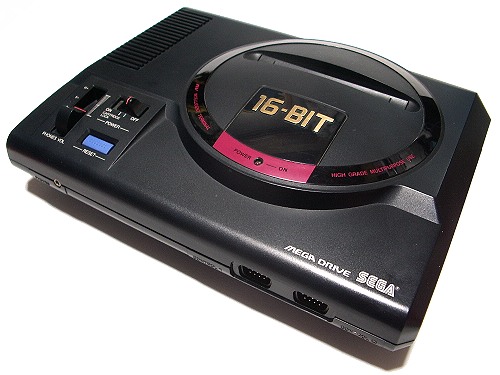
The late 80’s offered the first video game systems that I was actually familiar with as a child, in 1988 the Sega Genesis was released, my very first games console (of course obtained at a much later date as I wasn't born until 1993), and in 1989 gaming was once again changed forever, Nintendo were rolling from one success to another and released the Gameboy in 1989, which introduced the world to handheld gaming, In summation this decade was quite a roller coaster for the games industry, ending the golden age of arcade gaming, almost disappearing all together at one point only to come back with a whole new generation and finally introduce handheld gaming. Progression in the gaming industry had been made in leaps and bounds, despite some major setbacks.
References
Content.time.com, (2014). A History of Video Game Consoles - TIME. [online] Available at: http://content.time.com/time/interactive/0,31813,2029221,00.html [Accessed 27 Apr. 2014].
Icheg.org, (2014). Video Game History Timeline | ICHEG. [online] Available at: http://www.icheg.org/icheg-game-history/timeline/ [Accessed 27 Apr. 2014].
IGN, (2014). IGN Presents: the History of Atari - IGN. [online] Available at: http://uk.ign.com/articles/2014/03/20/ign-presents-the-history-of-atari [Accessed 27 Apr. 2014].
IGN, (2014). Ten Facts about the Great Video Game Crash of '83 - IGN. [online] Available at: http://uk.ign.com/articles/2011/09/21/ten-facts-about-the-great-video-game-crash-of-83 [Accessed 27 Apr. 2014].

No comments:
Post a Comment